Did Joseph Know Mary? A 14-Day Biblical Investigation
Fourteen days investigating one of Christianity’s most disputed passages: Matthew 1:25. Discover what “until” actually says in Greek, why Matthew’s genealogy changes at Joseph, how ancient Jews used “firstborn” and “brothers,” what the Gospel narratives do and do not establish, and how early Christians understood Mary’s perpetual virginity. We examine the exact Greek of the Septuagint, the ca. 5 BC Arsinoe funerary inscription, 1 Chronicles 23:21–22, Matthew 14:22, the women at the Cross, Josephus, Origen, Chrysostom, Jerome, Calvin, and the Second Council of Constantinople. Every lesson labels direct textual evidence, historical interpretations, disputed identifications, typology, and defined Catholic doctrine. This is not an argument that one verse proves everything: it is a disciplined examination of what Scripture does and does not say. 14 days, about 15–20 minutes daily, with source references, reflection, established Christian prayers, practical exercises, and comprehension quizzes. Source index: Matthew 1:16–25; Luke 1–2; Exodus 13; Matthew 13; Mark 6, 15; 1 Chronicles 23; John 19; CCC 499–501; James B. Prothro, Semper Virgo? (2019), https://doi.org/10.1177/1063851219829935.
Day 1 is open to everyone. A free account unlocks every day, saves your progress and lets you open any lesson at your own pace.
What the journey covers
- 1The Question Matthew Does and Does Not Answer
Distinguish the Gospel's express claims from later inferences.
about 18 min - 2What the Greek Word 'Until' Actually Says
Read the precise Greek without exaggerating what it proves.
about 18 min - 3The Boat and the Psalms: Biblical Tests for 'Until'
Test the temporal construction with Matthew and the Greek Old Testament.
about 18 min - 4Why the Genealogy Changes at Joseph
See Matthew 1:25 as the conclusion to a deliberate infancy narrative.
about 18 min - 5Firstborn Without a Secondborn: The Arsinoe Inscription
Use Jewish law and archaeological Greek evidence to correct a misleading assumption.
about 18 min - 6The Family Tree Where Cousins Are Called Brothers
The exact family relationship in Chronicles tests the word 'brothers.'
about 18 min - 7The Herodian Family: Brothers of Different Mothers
Distinguish kinship categories using Josephus and the Gospels.
about 18 min
Show all 14 days
- 8Which Mary Was the Mother of James and Joses?
Trace the multiple Marys while honestly identifying disputed relatives.
about 20 min - 9Why Did Jesus Entrust Mary to John?
Examine an important but often overstated argument from Calvary.
about 20 min - 10Why Did Mary Ask, 'How Can This Be?'
Explore the historic interpretation of Mary's question without overclaiming.
about 20 min - 11The Second-Century Witness: What the Protoevangelium Proves
Distinguish early Christian tradition from historical biography and Scripture.
about 20 min - 12Chrysostom, Jerome, Tertullian, and the Council
Follow the evidence from early teachers to conciliar confession.
about 20 min - 13The Ark and the Closed Gate: Typology, Not a Shortcut
Understand traditional Marian types without confusing interpretation and evidence.
about 20 min - 14The Strongest Objection—and an Answer Worth Defending
Bring every strand of evidence together into an honest, persuasive answer.
about 20 min
Ready to begin?
One short lesson a day is the suggested pace, but you can open any day whenever you like. Your account keeps your place.
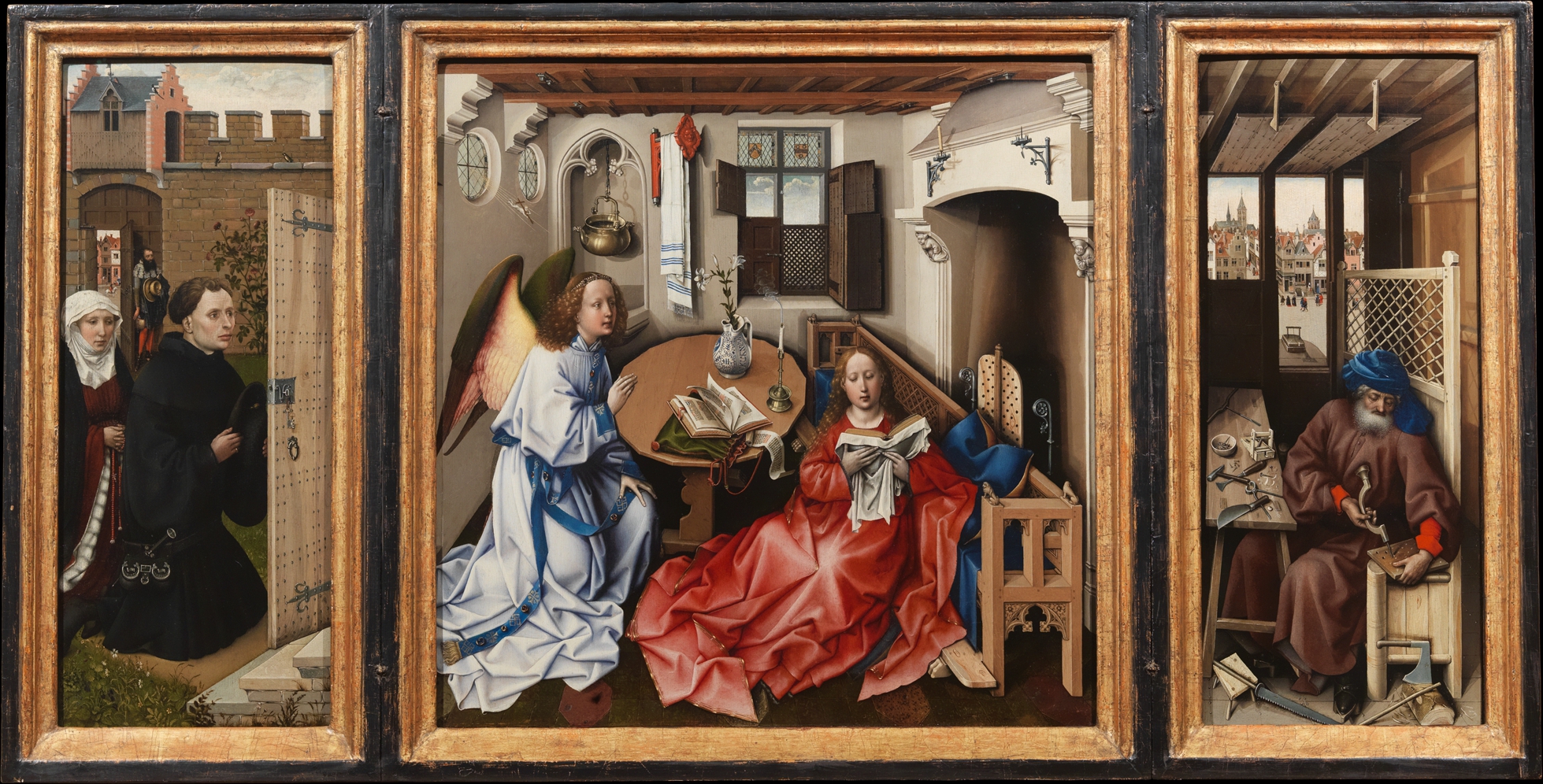
Artwork: Annunciation Triptych (Mérode Altarpiece), workshop of Robert Campin, ca. 1427–32, Metropolitan Museum of Art, The Cloisters, Open Access, https://www.metmuseum.org/art/collection/search/470304
SOURCES
- Scripture: Holy Bible — Revised Standard Version Catholic Edition, Days 1–14: the day-specific canonical passages (RSV–CE; all cited daily Scripture passages) · National Council of Churches · BibleGateway, 1965–1966
- Scripture: Greek New Testament — Matthew 1:25, Days 1–5, 14: Greek wording and manuscript variant (Greek text, morphology, critical-text and Textus Receptus comparison) · Greek New Testament · OpenBible, 1904/1894
- Scripture: Greek New Testament — Matthew 14:22, Day 3: exact heōs hou parallel (Greek text: ἕως οὗ ἀπολύσῃ) · Greek New Testament · OpenBible, 1904
- Scripture: Septuagint — Psalm 93, Day 3: Greek Psalm 93:14–15 / English Psalm 94 (Greek Psalm 93:14–15 (English Psalm 94)) · Greek Old Testament · Septuagint Bible
- Scripture: Septuagint — Psalm 71, Day 3: Greek Psalm 71:7 / English Psalm 72 (Greek Psalm 71:7 (English Psalm 72)) · Greek Old Testament · Septuagint Bible
- Scripture: Septuagint — 1 Chronicles 23, Day 6: first-cousin use of adelphoi (Greek 1 Chronicles 23:21–22, first cousins called adelphoi) · Greek Old Testament · BiblIndex
- Source: Arsinoe funerary inscription, CIJud II 1510, Day 5: Greek firstborn usage; mother died, survival of baby unknown (CIJud. II 1510; PHI Greek inscriptions text 227885) · Unknown ancient Jewish author · Packard Humanities Institute, c. 5 BC (tentative)
- Source: Semper Virgo? A Biblical Review of a Debated Dogma, Days 1–14: scholarly exegesis; competing hypotheses and qualifications (Pro Ecclesia 28/1 (2019), pp. 78–97; doi:10.1177/1063851219829935) · James B. Prothro · SAGE / Pro Ecclesia, 2019
- Catechism: Catechism of the Catholic Church — Mary Ever Virgin, Days 1, 4–5, 8–9, 12–14: CCC 496–507 (CCC 496–507, especially 499–501) · Catholic Church · Vatican
- Source: Jewish Antiquities — Herodias and Herod’s half-brother, Day 7: Antiquities 18.109–110, 18.136 (Antiquities of the Jews 18.109–110, 18.136) · Flavius Josephus · Perseus Digital Library, c. AD 93–94
- Church Father: Origen — Commentary on Matthew, Book X, Days 7, 11: Book X.17 (Section 17: The Brethren of Jesus) · Origen · New Advent, 3rd century
- Church Father: Chrysostom — Homily 5 on Matthew, Days 3, 9, 12: Matthew 1:25 (Exegesis of Matthew 1:25 and biblical until-parallels) · John Chrysostom · New Advent, 4th century
- Church Father: Jerome — Against Helvidius, Day 12: c. 383 AD (The Perpetual Virginity of Blessed Mary, c. AD 383) · Jerome · New Advent, c. AD 383
- Source: Protoevangelium of James — noncanonical early Christian text, Day 11: chapters 8–9; noncanonical (Chapters 8–9, noncanonical; do not treat as eyewitness history) · Anonymous · New Advent, mid-to-late 2nd century (probable)
- Church Father: Eusebius — Church History III, Day 8: chapter 11, citing Hegesippus (Book III, chapter 11: Hegesippus on Clopas and Symeon) · Eusebius of Caesarea · New Advent, 4th century
- Magisterium: Second Council of Constantinople (553), Day 12: anathemas 2 and 6 (Anathemas 2 and 6: 'ever-virgin' Mary) · Second Council of Constantinople · New Advent, 553
- Source: Calvin — Commentary on Matthew 1:25, Day 14: later events not narrated (Harmony of the Evangelists, exposition of Matthew 1:25) · John Calvin · Christian Classics Ethereal Library, 16th century
- Magisterium: Lumen Gentium, Day 13: sections 52–56 (Specific sections and locators are listed in the journey’s citations.) · Second Vatican Council · 1964